Hans Hendrischke

Hans Hendrischke

Professor
The University of Sydney Business School

Hans Hendrischke is professor of Chinese business and management at the University of Sydney Business School. He leads the School’s Australia China Business Network and chairs the Business and Economics Cluster of the University’s China Studies Centre.

Educated at universities in Germany, Taiwan and Japan, he did his postgraduate research at the Contemporary China Institute at the School of Oriental and African Studies, University of London.

He lived in China from 1979 working for the diplomatic service and in the finance industry. In his academic career he was director of the Centre for Chinese Political Economy at Macquarie University, head of school at UNSW and director of the University of Sydney Confucius Institute.

As an institutional economist he works on business institutions and emerging local entrepreneurship in China and has conducted hundreds of interviews with private entrepreneurs and local officials. Together with Barbara Krug, he co-edited China's Economy in the 21st Century: Enterprise and Business Behaviour.

Professor Hendrischke leads a strategic research cooperation with KPMG which publishes annual reports on Chinese outbound direct investment in Australia and thought leadership reports on Australia China business relations. He co-authored the 2014 Australia China Trade Report for the Australia China Business Council.


From this author

Inclusive and workplace acceptance of refugees
Partnering for refugee employment

When considering their talent pipelines, few companies think outside-of-the-box. Most refugees flourish in the workplace, and so do the businesses that hire them.

SDG 16
Institutional investors demand a more sustainable capitalism

Honey gathering is a solitary job in Indigenous communities. The collector then shares the honey with their community but refrains from joining in the honey feast themself. The idea is that the gathering is not about their gratification, it’s about their contribution to the collective.  

SDG15 Bushfires
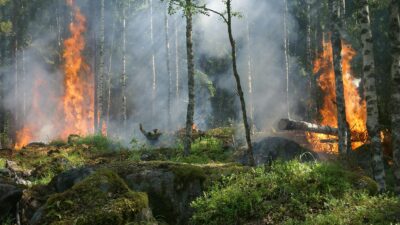
Optimisation model as a guide to burning forests to save forests

Setting fire to parts of a forest to save it might seem counterintuitive to urban communities. There is no equivalent of torching a few streets to protect a suburb. However, amongst First Nations people in Australia, hazard reduction burning is a well-established practice.

SDG13 - coal mining
Net zero now – it’s the economy AND the planet

In Australia, as elsewhere, the climate wars have focused on the climate versus jobs dichotomy. Yet while Australia remains highly dependent on fossil fuel extraction for its national economic prosperity it has also become increasingly unequal in its distribution of that wealth.