Genevieve Bell

Distinguished Professor and Director of the School of Cybernetics
Australian National Univerity

Distinguished Professor Genevieve Bell AO FTSE FAHA is a renowned anthropologist, technologist, and futurist. Genevieve completed her PhD in cultural anthropology at Stanford University in 1998 and is best known for her work at the intersection of cultural practice and technology development.

She is currently the Director of the School of Cybernetics and Florence Violet McKenzie Chair at the Australian National University (ANU) and a Vice President and Senior Fellow in Intel Labs at Intel Corporation.

Genevieve joined the ANU in 2017 after spending 18 years in Silicon Valley guiding Intel's product development and social science and user experience research capabilities. Genevieve was appointed the inaugural Director of the 3A Institute, co-founded by the ANU and CSIRO's Data61. The Institute's mission is to establish a new branch of engineering to responsibly and sustainably scale AI-enabled cyber-physical systems. In 2021, she was appointed Director of the new School of Cybernetics at the ANU, which in addition to housing the 3A Institute, is focused on building capacity in Systems and Design.

Photo by Andrew Meares

From this author

Inclusive and workplace acceptance of refugees
Partnering for refugee employment

When considering their talent pipelines, few companies think outside-of-the-box. Most refugees flourish in the workplace, and so do the businesses that hire them.

SDG 16
Institutional investors demand a more sustainable capitalism

Honey gathering is a solitary job in Indigenous communities. The collector then shares the honey with their community but refrains from joining in the honey feast themself. The idea is that the gathering is not about their gratification, it’s about their contribution to the collective.  

SDG15 Bushfires
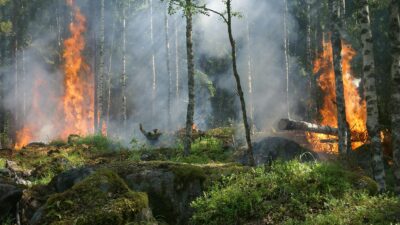
Optimisation model as a guide to burning forests to save forests

Setting fire to parts of a forest to save it might seem counterintuitive to urban communities. There is no equivalent of torching a few streets to protect a suburb. However, amongst First Nations people in Australia, hazard reduction burning is a well-established practice.

SDG13 - coal mining
Net zero now – it’s the economy AND the planet

In Australia, as elsewhere, the climate wars have focused on the climate versus jobs dichotomy. Yet while Australia remains highly dependent on fossil fuel extraction for its national economic prosperity it has also become increasingly unequal in its distribution of that wealth.