Emma Johnston

Deputy Vice-Chancellor (Research)
University of Sydney

A highly awarded and world leading authority in marine science and conservation, Professor Johnston's current research focuses on global change including marine debris, biological invasions, extreme events, and Antarctica's environmental future.

As the past President of Science & Technology Australia (STA), an elected position, she is a highly influential figure in the Australian higher education and research sector.

Professor Johnston has led major research projects for industry, government, the Australian Research Council, and the Australian Antarctic Science Program and contributed to the development of international and national research strategies, priorities, and plans. She is a sustainability and diversity champion and a Chief Author of the Australian State of Environment Report 2021. She is also a trusted advisor working across a range of government and industry bodies.

Professor Johnston is an elected fellow of the Australian Academy of Science (AAS), the Australian Academy of Technology and Engineering (ATSE) and the Royal Society of New South Wales (RSNSW) and was made an Officer of the Order of Australia (AO) in the 2018 Queen's Birthday Honours for ‘distinguished service to higher education, particularly to marine ecology and ecotoxicology, as an academic, researcher and administrator, and to scientific institutes.

From this author

Inclusive and workplace acceptance of refugees
Partnering for refugee employment

When considering their talent pipelines, few companies think outside-of-the-box. Most refugees flourish in the workplace, and so do the businesses that hire them.

SDG 16
Institutional investors demand a more sustainable capitalism

Honey gathering is a solitary job in Indigenous communities. The collector then shares the honey with their community but refrains from joining in the honey feast themself. The idea is that the gathering is not about their gratification, it’s about their contribution to the collective.  

SDG15 Bushfires
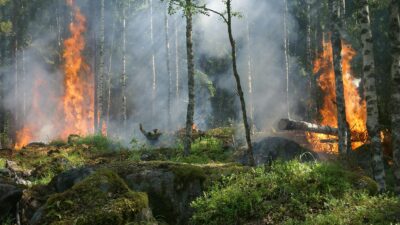
Optimisation model as a guide to burning forests to save forests

Setting fire to parts of a forest to save it might seem counterintuitive to urban communities. There is no equivalent of torching a few streets to protect a suburb. However, amongst First Nations people in Australia, hazard reduction burning is a well-established practice.

SDG13 - coal mining
Net zero now – it’s the economy AND the planet

In Australia, as elsewhere, the climate wars have focused on the climate versus jobs dichotomy. Yet while Australia remains highly dependent on fossil fuel extraction for its national economic prosperity it has also become increasingly unequal in its distribution of that wealth.