Dirk Hovorka

Dirk Hovorka

Associate Professor
The University of Sydney Business School

Dirk S. Hovorka is an Associate Professor in the Business Information Systems discipline at The University of Sydney Business School. He holds as MS in Geology and an MS in Interdisciplinary Telecommunications, and received his PhD in Information Systems from the University of Colorado. His research is centered on: the philosophical foundations of IS research with a focus on theory and theory development; design practices, ecosystems, configurations and theory: and on the co-constitutive role of information systems in scientific research. He research has been published in the Journal of the AIS, Information Systems Journal, European Journal of Information Systems, Communication of the AIS, Decision Support Systems, a number of book chapters and, the major IS conferences. Dirk was a co-author on "Secondary Design: A Case of Behavioral Design Research" which received the AIS 2011 Best Paper Award and was JAIS Best Paper.

Dirk's contributions to the IS community include: Guest Senior Editor for editor JAIS and THCI; Associate Editor of the International Conference on Information Systems (ICIS), Co-chair "Theories in IS" track HICSS, Editorial Board member of JAIS; Member of IFIP working group 8.2.


From this author

Inclusive and workplace acceptance of refugees
Partnering for refugee employment

When considering their talent pipelines, few companies think outside-of-the-box. Most refugees flourish in the workplace, and so do the businesses that hire them.

SDG 16
Institutional investors demand a more sustainable capitalism

Honey gathering is a solitary job in Indigenous communities. The collector then shares the honey with their community but refrains from joining in the honey feast themself. The idea is that the gathering is not about their gratification, it’s about their contribution to the collective.  

SDG15 Bushfires
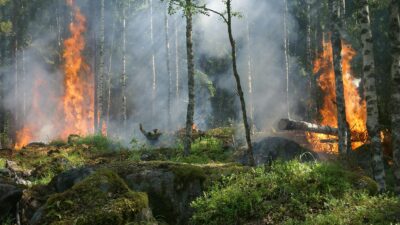
Optimisation model as a guide to burning forests to save forests

Setting fire to parts of a forest to save it might seem counterintuitive to urban communities. There is no equivalent of torching a few streets to protect a suburb. However, amongst First Nations people in Australia, hazard reduction burning is a well-established practice.

SDG13 - coal mining
Net zero now – it’s the economy AND the planet

In Australia, as elsewhere, the climate wars have focused on the climate versus jobs dichotomy. Yet while Australia remains highly dependent on fossil fuel extraction for its national economic prosperity it has also become increasingly unequal in its distribution of that wealth.