Angela Knox

Associate Professor
The University of Sydney Business School

Angela Knox is an Associate Professor of Work and Organisation and Academic Director (Professional Development) at the University of Sydney, Australia. Her research interests include job quality, precarious work, skills and migration. Angie has published widely and her work has appeared in Gender, Work and Organisation, Human Relations, Human Resource Management Journal, Industrial Relations, International Journal of Human Resource Management and Work, Employment and Society. She has also co-edited a book, Job Quality in Australia. She is an Editor at Work, Employment and Society and a member of the Editorial Board at Human Relations. Angie has received in excess of ten teaching awards, including the inaugural, prestigious Dean's Teaching Award and she is a Senior Fellow with the Higher Education Academy/ AdvanceHE.

From this author

Inclusive and workplace acceptance of refugees
Partnering for refugee employment

When considering their talent pipelines, few companies think outside-of-the-box. Most refugees flourish in the workplace, and so do the businesses that hire them.


SDG 16
Institutional investors demand a more sustainable capitalism

Honey gathering is a solitary job in Indigenous communities. The collector then shares the honey with their community but refrains from joining in the honey feast themself. The idea is that the gathering is not about their gratification, it’s about their contribution to the collective.  

SDG15 Bushfires
Optimisation model as a guide to burning forests to save forests

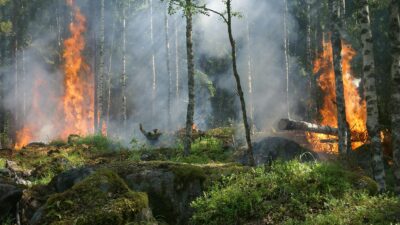
Setting fire to parts of a forest to save it might seem counterintuitive to urban communities. There is no equivalent of torching a few streets to protect a suburb. However, amongst First Nations people in Australia, hazard reduction burning is a well-established practice.

SDG13 - coal mining
Net zero now – it’s the economy AND the planet

In Australia, as elsewhere, the climate wars have focused on the climate versus jobs dichotomy. Yet while Australia remains highly dependent on fossil fuel extraction for its national economic prosperity it has also become increasingly unequal in its distribution of that wealth.